Johor’s “J” License Plate Series Approaches a Historic Milestone: From Legacy to Digital Transformation
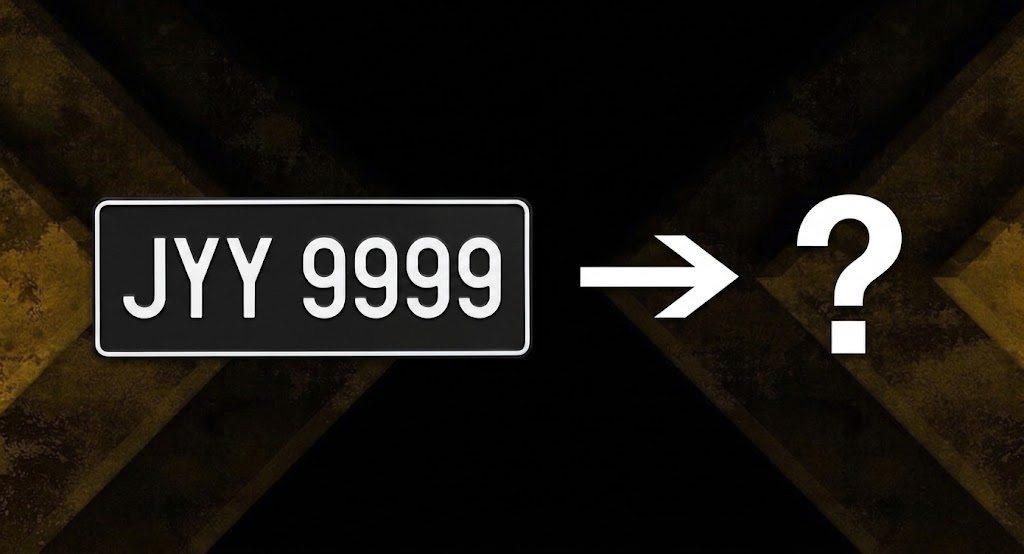
There’s something quietly poetic about a license plate. To most people, it’s just a combination of letters and numbers bolted to the front and rear of a vehicle. But if you’ve been paying attention to the roads in Johor lately, you might have noticed that the Johor J plate series is inching toward a milestone that hasn’t happened since the very first registration was issued in this southern state. The “J” prefix — one of Malaysia’s most recognisable state codes — is approaching the end of a full alphabetical cycle, and that moment carries more meaning than many realise.
This isn’t just about plates running out of combinations. It’s a story of how Johor has grown, how Malaysia’s roads have filled up, and how the entire system of JPJ vehicle registration is being reshaped for a new era. So let’s take a closer look at how we got here — and where things are heading.
A Brief History of the Johor J Plate
Malaysia’s vehicle registration system has been in place since the colonial era, and when the country formalised its state-based prefix system, Johor was assigned the letter “J.” Over the decades, every new car registered in Johor received a plate beginning with that single letter, followed by a combination of up to four digits, and in later series, additional letters.
The Johor J plate didn’t just track cars — it tracked the state’s growth. In the early decades, the plates moved slowly through the alphabet. A new series would appear every few years. But as Johor Bahru expanded, as Iskandar Malaysia drew in businesses and residents from across the region, registrations accelerated. The pace picked up further when cross-border traffic with Singapore kept Johor’s roads — and its registration queues — perpetually busy.
Today, the J series has worked its way through enough combinations that the end of the current alphabetical cycle is genuinely within sight. For enthusiasts, collectors, and everyday drivers alike, this is the kind of moment that doesn’t come around often.
Why This Milestone Matters to Johoreans
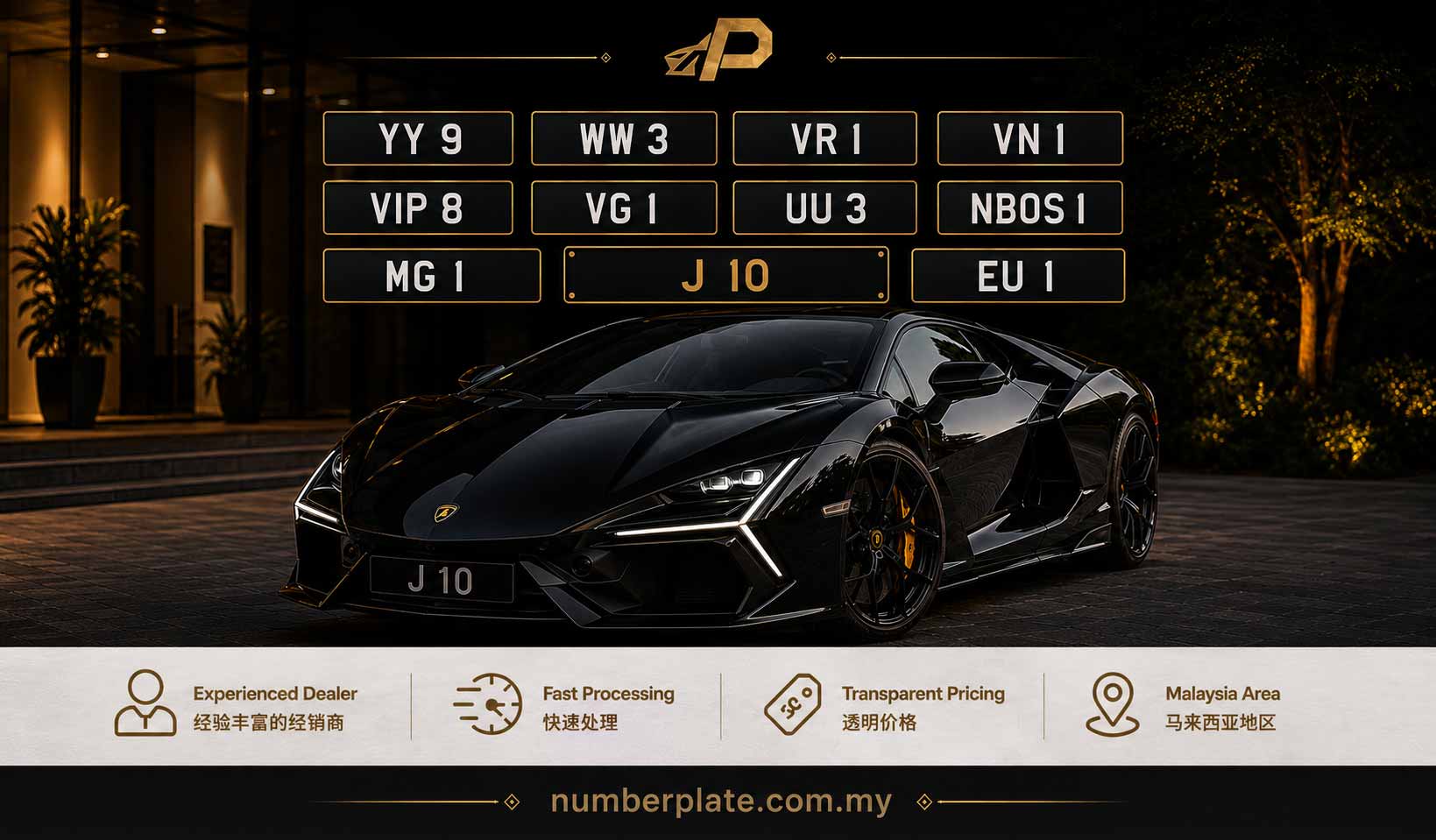
Ask any Johorean what they associate with a “J” plate, and you’ll likely hear a mix of local pride and nostalgia. There’s a sense of identity tied to the Johor J plate that goes beyond mere bureaucracy. Early-series plates — particularly those with short combinations like J 1, J 12, or J 123 — have long been seen as status symbols in the state.
This cultural weight means the milestone isn’t just administrative news. It sparks conversations about which numbers carry meaning, which combinations are considered lucky, and what collectors or investors should be watching. If you’re curious about the numerology and cultural significance behind specific plate numbers, it’s worth reading up on how to choose a lucky car plate using Feng Shui and number meanings — the logic applies just as much to Johor plates as anywhere else in the country.
The rarity factor also intensifies as a series matures. When fewer combinations remain in circulation, existing short or special Johor J plates become harder to find on the secondary market and more valuable when they do appear. Anyone sitting on a clean, low-digit J plate might be holding something worth considerably more than they paid for it.
Understanding How JPJ Vehicle Registration Works
For those less familiar with the mechanics behind plate allocation, here’s a quick overview. The Road Transport Department of Malaysia — known by its Malay acronym, JPJ — manages all vehicle registration in the country. Every time a new vehicle is sold in a particular state, the dealer or buyer applies for a registration number through JPJ’s system.
JPJ vehicle registration follows a structured series. In Johor’s case, the “J” prefix is followed by a letter-and-number sequence. Once all combinations within a given format are exhausted, JPJ introduces a new series with a fresh letter suffix. This is why you see variations like JA, JB, JC and so on — each new suffix represents a new chapter in the state’s registration history.
For popular or special numbers, JPJ holds public bidding sessions through its online platform, JPJeBid. These auctions can draw intense competition — some plates command prices that rival luxury goods. If you’re new to the bidding process, a detailed walkthrough of JPJeBid and how to participate in Malaysia’s number plate bidding is an excellent starting point before you commit to anything.
It’s also worth noting that JPJ vehicle registration isn’t static. The department has been updating its processes consistently over the years, and the shift to digital platforms has made the system more accessible — and more competitive — than ever before.
Malaysia Digital License Plate: The Future Arrives
Perhaps the most significant development shaping the next chapter of the Johor J plate story isn’t about letters or numbers at all — it’s about technology. Malaysia is actively moving toward a Malaysia digital license plate framework, and Johor, given its proximity to Singapore and its role as a logistics and tech hub, is likely to be among the early adopters when this system rolls out more broadly.
The concept of the Malaysia digital license plate involves replacing traditional reflective aluminium plates with smart, electronically readable alternatives. These plates can store vehicle data, communicate with road infrastructure, and in some implementations, update dynamically. The benefits for enforcement, toll collection, and border crossing management are substantial — which matters enormously in Johor, where daily cross-border traffic between Malaysia and Singapore runs into the tens of thousands of vehicles.
Globally, countries like the United Arab Emirates and parts of the United States have already piloted digital plates with mixed but promising results. Malaysia’s push toward a Malaysia digital license plate system fits neatly into the broader national agenda around smart city infrastructure, and JPJ has been progressively modernising its backend systems to support this transition.
What does this mean for the Johor J plate? It means that the physical plate itself may, within the next decade, become something quite different from what it is today. The letter and number combination will still carry significance — culturally and legally — but the medium through which it’s displayed and tracked will be fundamentally transformed.
How JPJ Vehicle Registration Is Going Digital
The digitisation of JPJ vehicle registration didn’t begin with digital plates. It started years ago with the launch of online portals, e-bidding for special numbers, and the integration of plate data into enforcement databases. Each of these steps reduced paperwork, shortened queues, and made the system more transparent.
More recently, JPJ introduced features that let owners check registration status, renew road tax, and manage transfers digitally. For anyone who has spent an afternoon at a JPJ counter, the improvement is striking. The same systems that once required in-person visits can now be handled from a phone.
For those navigating the JPJ vehicle registration process for the first time — whether buying a new plate, transferring ownership of a special number, or handling company vehicles — there are now clear guides to car plate interchange and transfer processes available online. The process is more straightforward than it used to be, though it still helps to know the steps in advance.
The digital shift also makes it easier to verify the authenticity of plates on the secondary market. This matters a great deal when purchasing a used special plate, where scams and misrepresented paperwork have historically been a concern. Knowing how to safely buy a used car plate in Malaysia and what red flags to watch for is essential before any transaction involving a pre-owned number.
The Secondary Market: What Happens to Older J Plates?
As the Johor J plate series progresses, older plates from earlier series gain a kind of vintage appeal. Short combinations — particularly single, double, or triple-digit plates from the earliest J series — are increasingly rare. And with rarity comes value.
The secondary market for special plates in Malaysia is active and, in some cases, surprisingly lucrative. The psychology behind VIP plate pricing explains much of this: numbers perceived as lucky, culturally significant, or simply aesthetically pleasing attract premiums that have nothing to do with the cost of the physical plate itself. In auction contexts, the bidding can escalate rapidly.
For collectors or investors considering entering this space, it’s worth understanding the full picture before making a move. Common pitfalls when buying a VIP plate for the first time are well-documented, and a little preparation goes a long way. Similarly, if you’re looking at legitimate ways to buy a special number plate in Malaysia without going through a bidding war, there are pathways worth exploring.
Some of the most eye-catching bids in recent years have involved Johor plates. The top JPJ winning bids and why certain plates cost more than property makes for fascinating reading — and provides useful context for anyone thinking about the investment potential of a Johor J plate from an early series.
Johor’s Growth Story, Told One Plate at a Time
It’s easy to overlook what a license plate database actually represents. Aggregate up the decades of Johor J plate registrations, and you have a near-perfect map of the state’s economic and population growth. Every factory that opened in Pasir Gudang, every apartment block that went up in Iskandar Puteri, every family that relocated from Kuala Lumpur to take advantage of Johor’s relative affordability — each one added vehicles to the road and ticked the registration counter forward.
The approach of a full cycle in the J series isn’t just a bureaucratic footnote. It’s evidence of scale that would have been hard to imagine when the very first J plate was issued. And it’s a reminder that as Johor continues to develop — with investments in data centres, logistics corridors, and cross-border economic integration — the pace of registration is unlikely to slow.
For drivers in Johor, this context gives even an ordinary plate a bit more significance. That number combination on your bumper is part of a living record of one of Malaysia’s most dynamic states.
What to Do If Your Johor Plate Needs Attention
Before wrapping up, a practical note. If you drive a vehicle registered in Johor and your plate has been damaged, lost, or requires replacement, the process is more straightforward than many assume. There’s a complete guide to car plate replacement and associated costs in Malaysia that walks through what’s needed.
Similarly, if your vehicle is registered under a company and you’re dealing with a transfer or administrative change, the step-by-step company car plate transfer process is worth reviewing before you approach JPJ.
The system has become considerably more user-friendly in recent years, and most straightforward cases can be resolved without significant hassle — provided you have the right documents ready.
Closing Thoughts
The Johor J plate is approaching a landmark moment — and that moment sits at the intersection of history, culture, and technology. The physical plate that has defined Johor vehicles for generations is gradually being reimagined through the lens of the Malaysia digital license plate movement, while the underlying processes of JPJ vehicle registration continue to modernise at pace.
Whether you’re a collector who sees opportunity, a driver who simply wants to understand what’s on your bumper, or someone curious about where Malaysia’s roads are headed, the story of the Johor J plate is one worth paying attention to.
For more insights on Malaysia’s number plate culture, the latest news, and guidance on buying, transferring, or replacing plates, visit the Number Plate Malaysia homepage, explore the gallery of special plates, or get in touch via the contact page. You can also keep up with the latest developments through the news section.


Johor’s “J” License Plate Series Approaches a Historic Milestone: From Legacy to Digital Transformation
There’s something quietly poetic about a license plate. To most people, it’s just a combination of letters and numbers bolted to the front and rear of a vehicle. But if you’ve been paying attention to the roads in Johor lately, you might have noticed that the Johor J plate series is inching toward a milestone that hasn’t happened since the very first registration was issued in this southern state. The “J” prefix — one of Malaysia’s most recognisable state codes — is approaching the end of a full alphabetical cycle, and that moment carries more meaning than many realise.
This isn’t just about plates running out of combinations. It’s a story of how Johor has grown, how Malaysia’s roads have filled up, and how the entire system of JPJ vehicle registration is being reshaped for a new era. So let’s take a closer look at how we got here — and where things are heading.
A Brief History of the Johor J Plate
Malaysia’s vehicle registration system has been in place since the colonial era, and when the country formalised its state-based prefix system, Johor was assigned the letter “J.” Over the decades, every new car registered in Johor received a plate beginning with that single letter, followed by a combination of up to four digits, and in later series, additional letters.
The Johor J plate didn’t just track cars — it tracked the state’s growth. In the early decades, the plates moved slowly through the alphabet. A new series would appear every few years. But as Johor Bahru expanded, as Iskandar Malaysia drew in businesses and residents from across the region, registrations accelerated. The pace picked up further when cross-border traffic with Singapore kept Johor’s roads — and its registration queues — perpetually busy.
Today, the J series has worked its way through enough combinations that the end of the current alphabetical cycle is genuinely within sight. For enthusiasts, collectors, and everyday drivers alike, this is the kind of moment that doesn’t come around often.
Why This Milestone Matters to Johoreans
Ask any Johorean what they associate with a “J” plate, and you’ll likely hear a mix of local pride and nostalgia. There’s a sense of identity tied to the Johor J plate that goes beyond mere bureaucracy. Early-series plates — particularly those with short combinations like J 1, J 12, or J 123 — have long been seen as status symbols in the state.
This cultural weight means the milestone isn’t just administrative news. It sparks conversations about which numbers carry meaning, which combinations are considered lucky, and what collectors or investors should be watching. If you’re curious about the numerology and cultural significance behind specific plate numbers, it’s worth reading up on how to choose a lucky car plate using Feng Shui and number meanings — the logic applies just as much to Johor plates as anywhere else in the country.
The rarity factor also intensifies as a series matures. When fewer combinations remain in circulation, existing short or special Johor J plates become harder to find on the secondary market and more valuable when they do appear. Anyone sitting on a clean, low-digit J plate might be holding something worth considerably more than they paid for it.
Understanding How JPJ Vehicle Registration Works
For those less familiar with the mechanics behind plate allocation, here’s a quick overview. The Road Transport Department of Malaysia — known by its Malay acronym, JPJ — manages all vehicle registration in the country. Every time a new vehicle is sold in a particular state, the dealer or buyer applies for a registration number through JPJ’s system.
JPJ vehicle registration follows a structured series. In Johor’s case, the “J” prefix is followed by a letter-and-number sequence. Once all combinations within a given format are exhausted, JPJ introduces a new series with a fresh letter suffix. This is why you see variations like JA, JB, JC and so on — each new suffix represents a new chapter in the state’s registration history.
For popular or special numbers, JPJ holds public bidding sessions through its online platform, JPJeBid. These auctions can draw intense competition — some plates command prices that rival luxury goods. If you’re new to the bidding process, a detailed walkthrough of JPJeBid and how to participate in Malaysia’s number plate bidding is an excellent starting point before you commit to anything.
It’s also worth noting that JPJ vehicle registration isn’t static. The department has been updating its processes consistently over the years, and the shift to digital platforms has made the system more accessible — and more competitive — than ever before.
Malaysia Digital License Plate: The Future Arrives
Perhaps the most significant development shaping the next chapter of the Johor J plate story isn’t about letters or numbers at all — it’s about technology. Malaysia is actively moving toward a Malaysia digital license plate framework, and Johor, given its proximity to Singapore and its role as a logistics and tech hub, is likely to be among the early adopters when this system rolls out more broadly.
The concept of the Malaysia digital license plate involves replacing traditional reflective aluminium plates with smart, electronically readable alternatives. These plates can store vehicle data, communicate with road infrastructure, and in some implementations, update dynamically. The benefits for enforcement, toll collection, and border crossing management are substantial — which matters enormously in Johor, where daily cross-border traffic between Malaysia and Singapore runs into the tens of thousands of vehicles.
Globally, countries like the United Arab Emirates and parts of the United States have already piloted digital plates with mixed but promising results. Malaysia’s push toward a Malaysia digital license plate system fits neatly into the broader national agenda around smart city infrastructure, and JPJ has been progressively modernising its backend systems to support this transition.
What does this mean for the Johor J plate? It means that the physical plate itself may, within the next decade, become something quite different from what it is today. The letter and number combination will still carry significance — culturally and legally — but the medium through which it’s displayed and tracked will be fundamentally transformed.
How JPJ Vehicle Registration Is Going Digital
The digitisation of JPJ vehicle registration didn’t begin with digital plates. It started years ago with the launch of online portals, e-bidding for special numbers, and the integration of plate data into enforcement databases. Each of these steps reduced paperwork, shortened queues, and made the system more transparent.
More recently, JPJ introduced features that let owners check registration status, renew road tax, and manage transfers digitally. For anyone who has spent an afternoon at a JPJ counter, the improvement is striking. The same systems that once required in-person visits can now be handled from a phone.
For those navigating the JPJ vehicle registration process for the first time — whether buying a new plate, transferring ownership of a special number, or handling company vehicles — there are now clear guides to car plate interchange and transfer processes available online. The process is more straightforward than it used to be, though it still helps to know the steps in advance.
The digital shift also makes it easier to verify the authenticity of plates on the secondary market. This matters a great deal when purchasing a used special plate, where scams and misrepresented paperwork have historically been a concern. Knowing how to safely buy a used car plate in Malaysia and what red flags to watch for is essential before any transaction involving a pre-owned number.
The Secondary Market: What Happens to Older J Plates?
As the Johor J plate series progresses, older plates from earlier series gain a kind of vintage appeal. Short combinations — particularly single, double, or triple-digit plates from the earliest J series — are increasingly rare. And with rarity comes value.
The secondary market for special plates in Malaysia is active and, in some cases, surprisingly lucrative. The psychology behind VIP plate pricing explains much of this: numbers perceived as lucky, culturally significant, or simply aesthetically pleasing attract premiums that have nothing to do with the cost of the physical plate itself. In auction contexts, the bidding can escalate rapidly.
For collectors or investors considering entering this space, it’s worth understanding the full picture before making a move. Common pitfalls when buying a VIP plate for the first time are well-documented, and a little preparation goes a long way. Similarly, if you’re looking at legitimate ways to buy a special number plate in Malaysia without going through a bidding war, there are pathways worth exploring.
Some of the most eye-catching bids in recent years have involved Johor plates. The top JPJ winning bids and why certain plates cost more than property makes for fascinating reading — and provides useful context for anyone thinking about the investment potential of a Johor J plate from an early series.
Johor’s Growth Story, Told One Plate at a Time
It’s easy to overlook what a license plate database actually represents. Aggregate up the decades of Johor J plate registrations, and you have a near-perfect map of the state’s economic and population growth. Every factory that opened in Pasir Gudang, every apartment block that went up in Iskandar Puteri, every family that relocated from Kuala Lumpur to take advantage of Johor’s relative affordability — each one added vehicles to the road and ticked the registration counter forward.
The approach of a full cycle in the J series isn’t just a bureaucratic footnote. It’s evidence of scale that would have been hard to imagine when the very first J plate was issued. And it’s a reminder that as Johor continues to develop — with investments in data centres, logistics corridors, and cross-border economic integration — the pace of registration is unlikely to slow.
For drivers in Johor, this context gives even an ordinary plate a bit more significance. That number combination on your bumper is part of a living record of one of Malaysia’s most dynamic states.
What to Do If Your Johor Plate Needs Attention
Before wrapping up, a practical note. If you drive a vehicle registered in Johor and your plate has been damaged, lost, or requires replacement, the process is more straightforward than many assume. There’s a complete guide to car plate replacement and associated costs in Malaysia that walks through what’s needed.
Similarly, if your vehicle is registered under a company and you’re dealing with a transfer or administrative change, the step-by-step company car plate transfer process is worth reviewing before you approach JPJ.
The system has become considerably more user-friendly in recent years, and most straightforward cases can be resolved without significant hassle — provided you have the right documents ready.
Closing Thoughts
The Johor J plate is approaching a landmark moment — and that moment sits at the intersection of history, culture, and technology. The physical plate that has defined Johor vehicles for generations is gradually being reimagined through the lens of the Malaysia digital license plate movement, while the underlying processes of JPJ vehicle registration continue to modernise at pace.
Whether you’re a collector who sees opportunity, a driver who simply wants to understand what’s on your bumper, or someone curious about where Malaysia’s roads are headed, the story of the Johor J plate is one worth paying attention to.
For more insights on Malaysia’s number plate culture, the latest news, and guidance on buying, transferring, or replacing plates, visit the Number Plate Malaysia homepage, explore the gallery of special plates, or get in touch via the contact page. You can also keep up with the latest developments through the news section.