
Is a Number Plate a Smart Investment? Malaysia’s Real Resale Value Cases (2026)
Number plate investment Malaysia is a topic that comes up the moment you watch a JPJ auction headline scream “RM1.2 million for a number plate” — and wonder whether that’s a smart move or just an expensive ego trip. Here’s the short answer: number plate investment Malaysia can genuinely pay off, but only for a narrow category of plates — and most buyers don’t realise this until they’ve already overpaid.
The plates that hold or grow their value share three things in common: extreme rarity, broad cultural appeal (not just personal sentiment), and a clean, transferable registration history through systems like JPJeBid. Everything else — the “lucky” combo you picked because it matched your birthday, or the prefix you liked because it sounded nice — is very unlikely to resell for more than you paid. Often it resells for less, or doesn’t sell at all.
That’s the verdict. Now let’s walk through the real cases that prove it, and what actually separates a profitable plate from a sentimental purchase.

The Real Numbers Behind Malaysia’s Most Expensive Plates
Before talking strategy, it helps to see what people have actually paid. These aren’t rumours — they’re official JPJ eBid results reported by the transport ministry, and you can read more about how these shocking JPJ winning bids stack up against the price of a mansion.
The most expensive plate in Malaysian history is FF1, bought by the Sultan of Johor for RM1.2 million, as reported by SoyaCincau. Before that, the previous national record was “Malaysia 1”, which sold for RM1,111,111. The FF series as a whole — launched to mark JPJ’s anniversary — pulled in RM34.2 million in total bids, with FF8 alone going for RM950,000 and FF9 close behind at RM911,999, according to paultan.org’s coverage of the auction results.
Other series tell a similar story. The PPP series collected over RM7.2 million, with PPP1 alone fetching RM260,000. The AMY series brought in RM6 million, and the standout AMY1 sold for RM400,000. More recently, Penang’s P_P series raised over RM21.6 million, with P1P hitting RM1.1 million, as confirmed in FMT’s report on the auction — making it one of the highest single-plate bids ever recorded outside the FF series.
Notice the pattern. Every single one of these record-breaking plates is either a single-letter prefix, a repeated-letter combo, or a single/repeated digit like “1” or “8”. None of them are personal birthdates, anniversaries, or random “lucky” arrangements. That’s not a coincidence — it’s the entire foundation of car plate resale value Malaysia buyers should understand before bidding on anything.
Car Plate Resale Value Malaysia: What Actually Moves the Price
This is the part most first-time buyers skip, and it’s the most expensive mistake to make.
A plate’s resale value isn’t about what it means to you. It’s about whether a stranger would also want it badly enough to outbid other strangers. JPJeBid auctions prove this every single time — the numbers with the most bidders aren’t the ones with sentimental meaning to one person, they’re the ones with universal appeal. This is exactly what drives the psychology of VIP plates: repeated digits, palindromes, single letters, or numbers tied to luck across multiple cultures (8 in Chinese culture, for instance, or low single digits that signal status regardless of background).
Here’s a simple way to think about it:
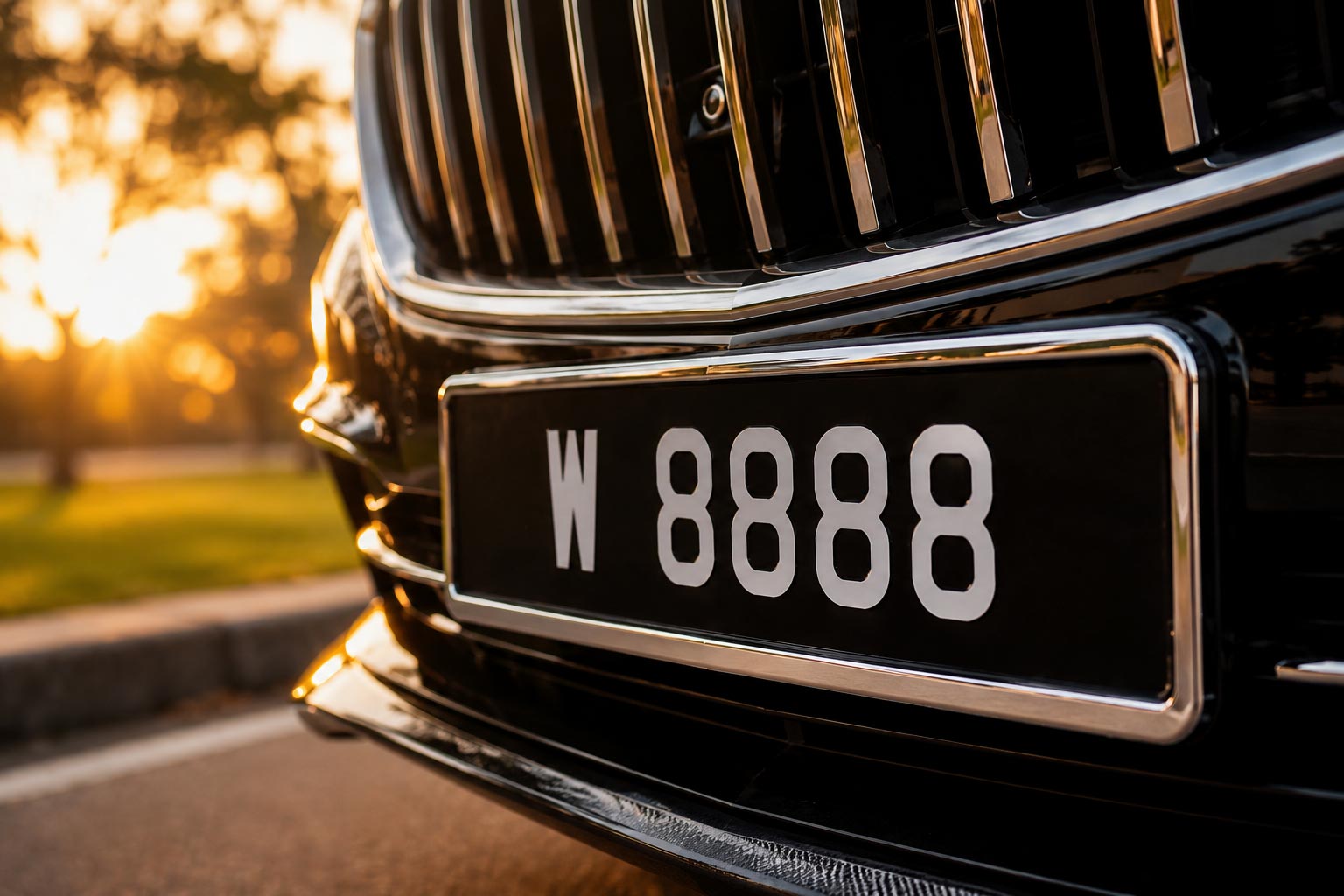
- High resale potential: single letters (like Selangor’s coveted “B” plate or KL’s famous “W” plate), repeated digits (888, 8888), short and clean combinations (1, 2, 9), rare prefixes tied to a state or royal series
- Low resale potential: personal dates, mixed combinations that only mean something to the original owner, long number strings, common prefixes with no scarcity
If you’re buying purely for sentiment — your wedding date, your child’s birthday — that’s a completely valid reason to buy a plate. Just don’t expect the market to pay you back for the sentiment. The market only pays for scarcity and broad desirability.
This is also why two plates that look “similarly special” can have wildly different resale outcomes. A plate that’s rare and easy for anyone to recognise as desirable will hold value. A plate that’s rare but only meaningful to you personally usually won’t.
Number Plate Investment Malaysia: Is It Actually Worth It?
Here’s where most articles oversimplify things, so let’s be direct about it.
Number plate investment Malaysia behaves more like collecting rare coins or watches than buying property or stocks. There’s no rental yield, no dividend, and no guaranteed buyer waiting on the other side when you want to sell. What drives the price is pure demand at the moment you decide to sell — and demand for plates can shift depending on what series JPJ releases next, current economic sentiment, and even what’s trending culturally that year.
That said, the data above shows real upside is possible — but it concentrates almost entirely at the very top of the rarity scale. A plate like FF1 or “Malaysia 1” isn’t really comparable to a regular fancy plate you’d find in a JPJeBid auction for a few thousand ringgit. The gap between “interesting plate” and “investment-grade plate” is enormous, and very few plates ever cross into that second category.
If you’re going in purely for return on investment, treat it the way collectors treat rare items: buy the rarest, most broadly desirable thing you can afford, hold it long-term, and accept that liquidity (finding a buyer when you actually want to sell) is never guaranteed.
Final Verdict: Should You Try Number Plate Investment Malaysia Right Now?
If you’re chasing genuine resale value, focus on plates with structural scarcity — short digit combinations, single letters, or rare prefixes — and avoid anything where the appeal is purely personal. If you’re chasing meaning over money, buy what speaks to you and treat the plate as a keepsake, not a portfolio asset.
Before you place your first bid, it’s worth reading through these common pitfalls first-time VIP plate buyers make — many of the “mistakes” buyers regret are the same ones that quietly kill resale value down the line.
Either way, go in with realistic expectations. The headline-grabbing million-ringgit plates are the exception, not the norm — and they got there because thousands of bidders, not just one buyer, agreed the number was worth fighting for. That’s the real lesson behind every successful number plate investment Malaysia case study you’ll find.


Is a Number Plate a Smart Investment? Malaysia’s Real Resale Value Cases (2026)
Number plate investment Malaysia is a topic that comes up the moment you watch a JPJ auction headline scream “RM1.2 million for a number plate” — and wonder whether that’s a smart move or just an expensive ego trip. Here’s the short answer: number plate investment Malaysia can genuinely pay off, but only for a narrow category of plates — and most buyers don’t realise this until they’ve already overpaid.
The plates that hold or grow their value share three things in common: extreme rarity, broad cultural appeal (not just personal sentiment), and a clean, transferable registration history through systems like JPJeBid. Everything else — the “lucky” combo you picked because it matched your birthday, or the prefix you liked because it sounded nice — is very unlikely to resell for more than you paid. Often it resells for less, or doesn’t sell at all.
That’s the verdict. Now let’s walk through the real cases that prove it, and what actually separates a profitable plate from a sentimental purchase.
The Real Numbers Behind Malaysia’s Most Expensive Plates
Before talking strategy, it helps to see what people have actually paid. These aren’t rumours — they’re official JPJ eBid results reported by the transport ministry, and you can read more about how these shocking JPJ winning bids stack up against the price of a mansion.
The most expensive plate in Malaysian history is FF1, bought by the Sultan of Johor for RM1.2 million, as reported by SoyaCincau. Before that, the previous national record was “Malaysia 1”, which sold for RM1,111,111. The FF series as a whole — launched to mark JPJ’s anniversary — pulled in RM34.2 million in total bids, with FF8 alone going for RM950,000 and FF9 close behind at RM911,999, according to paultan.org’s coverage of the auction results.
Other series tell a similar story. The PPP series collected over RM7.2 million, with PPP1 alone fetching RM260,000. The AMY series brought in RM6 million, and the standout AMY1 sold for RM400,000. More recently, Penang’s P_P series raised over RM21.6 million, with P1P hitting RM1.1 million, as confirmed in FMT’s report on the auction — making it one of the highest single-plate bids ever recorded outside the FF series.
Notice the pattern. Every single one of these record-breaking plates is either a single-letter prefix, a repeated-letter combo, or a single/repeated digit like “1” or “8”. None of them are personal birthdates, anniversaries, or random “lucky” arrangements. That’s not a coincidence — it’s the entire foundation of car plate resale value Malaysia buyers should understand before bidding on anything.
Car Plate Resale Value Malaysia: What Actually Moves the Price
This is the part most first-time buyers skip, and it’s the most expensive mistake to make.
A plate’s resale value isn’t about what it means to you. It’s about whether a stranger would also want it badly enough to outbid other strangers. JPJeBid auctions prove this every single time — the numbers with the most bidders aren’t the ones with sentimental meaning to one person, they’re the ones with universal appeal. This is exactly what drives the psychology of VIP plates: repeated digits, palindromes, single letters, or numbers tied to luck across multiple cultures (8 in Chinese culture, for instance, or low single digits that signal status regardless of background).
Here’s a simple way to think about it:
- High resale potential: single letters (like Selangor’s coveted “B” plate or KL’s famous “W” plate), repeated digits (888, 8888), short and clean combinations (1, 2, 9), rare prefixes tied to a state or royal series
- Low resale potential: personal dates, mixed combinations that only mean something to the original owner, long number strings, common prefixes with no scarcity
If you’re buying purely for sentiment — your wedding date, your child’s birthday — that’s a completely valid reason to buy a plate. Just don’t expect the market to pay you back for the sentiment. The market only pays for scarcity and broad desirability.
This is also why two plates that look “similarly special” can have wildly different resale outcomes. A plate that’s rare and easy for anyone to recognise as desirable will hold value. A plate that’s rare but only meaningful to you personally usually won’t.
Number Plate Investment Malaysia: Is It Actually Worth It?
Here’s where most articles oversimplify things, so let’s be direct about it.
Number plate investment Malaysia behaves more like collecting rare coins or watches than buying property or stocks. There’s no rental yield, no dividend, and no guaranteed buyer waiting on the other side when you want to sell. What drives the price is pure demand at the moment you decide to sell — and demand for plates can shift depending on what series JPJ releases next, current economic sentiment, and even what’s trending culturally that year.
That said, the data above shows real upside is possible — but it concentrates almost entirely at the very top of the rarity scale. A plate like FF1 or “Malaysia 1” isn’t really comparable to a regular fancy plate you’d find in a JPJeBid auction for a few thousand ringgit. The gap between “interesting plate” and “investment-grade plate” is enormous, and very few plates ever cross into that second category.
If you’re going in purely for return on investment, treat it the way collectors treat rare items: buy the rarest, most broadly desirable thing you can afford, hold it long-term, and accept that liquidity (finding a buyer when you actually want to sell) is never guaranteed.
Final Verdict: Should You Try Number Plate Investment Malaysia Right Now?
If you’re chasing genuine resale value, focus on plates with structural scarcity — short digit combinations, single letters, or rare prefixes — and avoid anything where the appeal is purely personal. If you’re chasing meaning over money, buy what speaks to you and treat the plate as a keepsake, not a portfolio asset.
Before you place your first bid, it’s worth reading through these common pitfalls first-time VIP plate buyers make — many of the “mistakes” buyers regret are the same ones that quietly kill resale value down the line.
Either way, go in with realistic expectations. The headline-grabbing million-ringgit plates are the exception, not the norm — and they got there because thousands of bidders, not just one buyer, agreed the number was worth fighting for. That’s the real lesson behind every successful number plate investment Malaysia case study you’ll find.