
New Car Number Plate Malaysia: New vs Used Car Registration Guide
Quick Answer First
If you’re buying a new car in Malaysia, your dealer typically handles the new car number plate Malaysia application through JPJ on your behalf, and you’ll usually drive off with your registered plate within 3-7 working days. If you’re buying used, the process is different — ownership transfer and used car registration Malaysia procedures apply, and your existing plate number stays with the vehicle unless you specifically request a change. Either way, the core agency you’re dealing with is JPJ (Jabatan Pengangkutan Jalan), and understanding the JPJ number plate registration process upfront saves you a lot of back-and-forth at the counter.
Now let’s break down exactly how each path works.
New Car Number Plate Malaysia: What Actually Happens
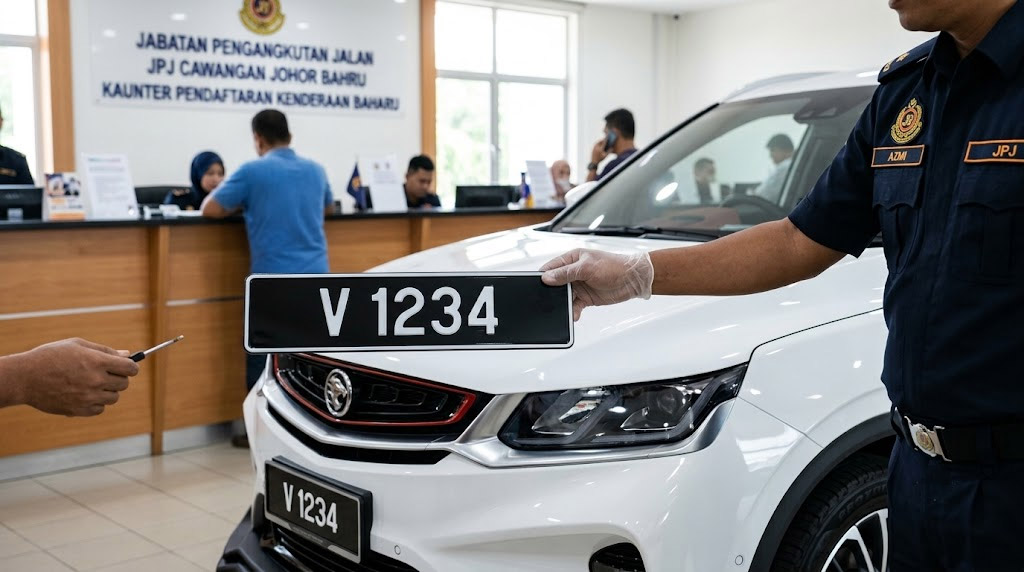
When you sign the booking form for a new car, the dealership’s admin team usually submits your registration paperwork directly to JPJ. You’ll need your MyKad, proof of address, and sometimes a deposit slip. The dealer applies for your plate number, and unless you’ve opted for a special or VIP number through JPJ’s e-Bidding system, you’ll receive a randomly assigned standard plate.
One thing many first-time buyers don’t expect: insurance and road tax must be settled before the plate is issued, not after. Your dealer will usually bundle this into the process, but it’s worth double-checking the timeline yourself so there’s no delay picking up your car.
If you want a custom or “auspicious” number, that’s a separate application through JPJ’s online bidding portal, and it can take longer — sometimes a few weeks depending on demand for that particular number.
Used Car Registration Malaysia: The Ownership Transfer Process
Buying second-hand is a completely different workflow. Here, you’re not registering a brand-new plate — you’re transferring ownership of an existing one. This is where used car registration Malaysia procedures come in, and it’s honestly the step where most delays happen if paperwork isn’t in order.
You’ll need the seller’s grant (geran), a signed JPJ ownership transfer form (commonly known as the K1 and K2 forms), your MyKad, and a roadworthiness inspection if the car is older or imported. Both buyer and seller typically need to be present at the JPJ counter, or alternatively, this can be done through an authorized agent or puspakom-linked dealer if either party can’t attend in person.
A practical tip: always check outstanding summons and road tax status before finalizing the deal. Unpaid summonses tied to the vehicle can hold up the transfer, and that’s a headache you don’t want after you’ve already paid.
JPJ Number Plate Registration: Step-by-Step Overview
Regardless of whether your car is new or used, the JPJ number plate registration system follows a fairly consistent backbone:
- Submit ownership or registration documents at a JPJ branch or via MyJPJ app
- Settle road tax and confirm valid insurance coverage
- Vehicle inspection (required for used cars, optional for new ones unless flagged)
- Plate number confirmation — random assignment or special number bidding
- Collection of updated geran and physical plate installation
The MyJPJ app has made parts of this smoother in recent years, letting you check road tax renewal and basic registration status without queuing at a branch. That said, the actual ownership transfer for used cars still generally requires an in-person visit.
New vs Used: Quick Comparison
For new cars, the dealer does most of the heavy lifting, and your plate is freshly issued. For used cars, you’re inheriting a plate’s history along with the vehicle — so checking the vehicle’s background through JPJ’s e-Daftar portal before committing to a purchase is genuinely worth the ten minutes it takes.
If you’re shopping for a specific plate series — say a Penang “P” or Selangor “B” combination — it helps to understand how Malaysia’s state-based plate prefixes work, since this affects both new registrations and how desirable a used plate might be on resale.
Final Word
Whether you’re driving home a new car or finalizing a used one, the new car number plate Malaysia and used car registration Malaysia processes both ultimately funnel through JPJ’s system — the difference is really just in the paperwork weight. New car buyers lean on their dealer; used car buyers need to be a bit more hands-on with verification. Either way, getting your documents sorted early is the single biggest thing that keeps the process smooth.


New Car Number Plate Malaysia: New vs Used Car Registration Guide
Quick Answer First
If you’re buying a new car in Malaysia, your dealer typically handles the new car number plate Malaysia application through JPJ on your behalf, and you’ll usually drive off with your registered plate within 3-7 working days. If you’re buying used, the process is different — ownership transfer and used car registration Malaysia procedures apply, and your existing plate number stays with the vehicle unless you specifically request a change. Either way, the core agency you’re dealing with is JPJ (Jabatan Pengangkutan Jalan), and understanding the JPJ number plate registration process upfront saves you a lot of back-and-forth at the counter.
Now let’s break down exactly how each path works.
New Car Number Plate Malaysia: What Actually Happens
When you sign the booking form for a new car, the dealership’s admin team usually submits your registration paperwork directly to JPJ. You’ll need your MyKad, proof of address, and sometimes a deposit slip. The dealer applies for your plate number, and unless you’ve opted for a special or VIP number through JPJ’s e-Bidding system, you’ll receive a randomly assigned standard plate.
One thing many first-time buyers don’t expect: insurance and road tax must be settled before the plate is issued, not after. Your dealer will usually bundle this into the process, but it’s worth double-checking the timeline yourself so there’s no delay picking up your car.
If you want a custom or “auspicious” number, that’s a separate application through JPJ’s online bidding portal, and it can take longer — sometimes a few weeks depending on demand for that particular number.
Used Car Registration Malaysia: The Ownership Transfer Process
Buying second-hand is a completely different workflow. Here, you’re not registering a brand-new plate — you’re transferring ownership of an existing one. This is where used car registration Malaysia procedures come in, and it’s honestly the step where most delays happen if paperwork isn’t in order.
You’ll need the seller’s grant (geran), a signed JPJ ownership transfer form (commonly known as the K1 and K2 forms), your MyKad, and a roadworthiness inspection if the car is older or imported. Both buyer and seller typically need to be present at the JPJ counter, or alternatively, this can be done through an authorized agent or puspakom-linked dealer if either party can’t attend in person.
A practical tip: always check outstanding summons and road tax status before finalizing the deal. Unpaid summonses tied to the vehicle can hold up the transfer, and that’s a headache you don’t want after you’ve already paid.
JPJ Number Plate Registration: Step-by-Step Overview
Regardless of whether your car is new or used, the JPJ number plate registration system follows a fairly consistent backbone:
- Submit ownership or registration documents at a JPJ branch or via MyJPJ app
- Settle road tax and confirm valid insurance coverage
- Vehicle inspection (required for used cars, optional for new ones unless flagged)
- Plate number confirmation — random assignment or special number bidding
- Collection of updated geran and physical plate installation
The MyJPJ app has made parts of this smoother in recent years, letting you check road tax renewal and basic registration status without queuing at a branch. That said, the actual ownership transfer for used cars still generally requires an in-person visit.
New vs Used: Quick Comparison
For new cars, the dealer does most of the heavy lifting, and your plate is freshly issued. For used cars, you’re inheriting a plate’s history along with the vehicle — so checking the vehicle’s background through JPJ’s e-Daftar portal before committing to a purchase is genuinely worth the ten minutes it takes.
If you’re shopping for a specific plate series — say a Penang “P” or Selangor “B” combination — it helps to understand how Malaysia’s state-based plate prefixes work, since this affects both new registrations and how desirable a used plate might be on resale.
Final Word
Whether you’re driving home a new car or finalizing a used one, the new car number plate Malaysia and used car registration Malaysia processes both ultimately funnel through JPJ’s system — the difference is really just in the paperwork weight. New car buyers lean on their dealer; used car buyers need to be a bit more hands-on with verification. Either way, getting your documents sorted early is the single biggest thing that keeps the process smooth.