
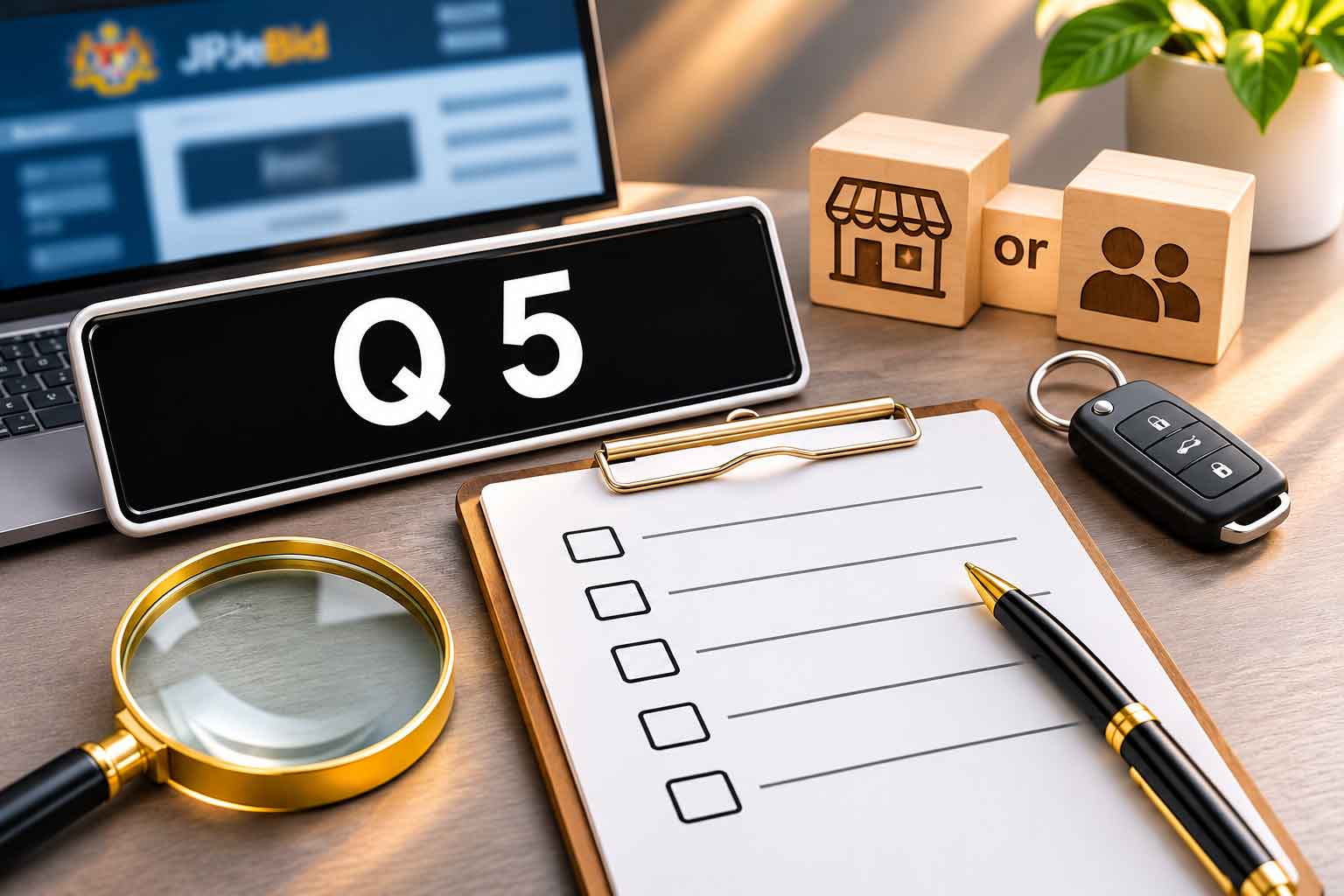
Private Seller or Dealer? 5 Questions to Ask Before Paying for a VIP Plate
The Short Answer: Never Pay Before You Verify These 5 Things
Buying a VIP number plate in Malaysia can be exciting, especially when you finally find a number you have been looking for. But before making payment, take a moment to check who you are dealing with and whether the number can legally be transferred or registered in your name.
Should you buy from a number plate dealer or a private seller? Neither option is automatically safer. A professional-looking business page does not prove that a seller owns the number, while a private seller is not necessarily dishonest.
Before paying for any VIP number plate, ask these five questions:
- Who is the registered owner or successful bidder?
- Can you provide documents proving the number’s ownership and status?
- How exactly will the number be transferred or registered?
- What happens if JPJ does not approve or complete the process?
- Can I have a written agreement and official payment record?
These questions matter whether you are buying in Kuala Lumpur, Selangor, Johor, Penang, Sabah or Sarawak.
The most important rule is simple: verify the number and the transfer process before paying, not after.
VIP Number Plate Dealer vs Private Seller: Which Is Safer?
There is no automatic winner. Both options can work, but the level of protection depends on the seller’s credibility, the documents provided and the transaction process.
Buying from a Number Plate Dealer
A number plate dealer may have access to different registration numbers and may help buyers understand the available options. Some sellers also offer assistance with paperwork and the administrative process.
Potential advantages include:
- More number choices to compare.
- One point of contact during the enquiry.
- Assistance with understanding the required documents.
- A written quotation or transaction arrangement, if provided.
However, do not assume that every number plate dealer owns the numbers being advertised. Some may act as brokers or intermediaries for other owners.
Ask whether the seller is the registered owner, the successful bidder, an authorised representative or simply an intermediary. These roles are not the same.
Buying from a Private Seller
A private seller may be offering a number already registered to a vehicle or a number obtained through an earlier bidding exercise.
You may be able to communicate directly with the person involved, but you will need to check the ownership documents and understand the applicable JPJ procedure yourself.
Potential advantages include:
- Direct communication with the seller.
- A chance to discuss the price directly.
- The ability to ask for supporting documents from the person claiming ownership.
However, a private seller’s claim is not proof of ownership. A screenshot, number plate photograph or payment receipt alone does not confirm that the seller can legally complete the transaction.
The better choice is the seller who can clearly prove their authority and explain the correct JPJ process.
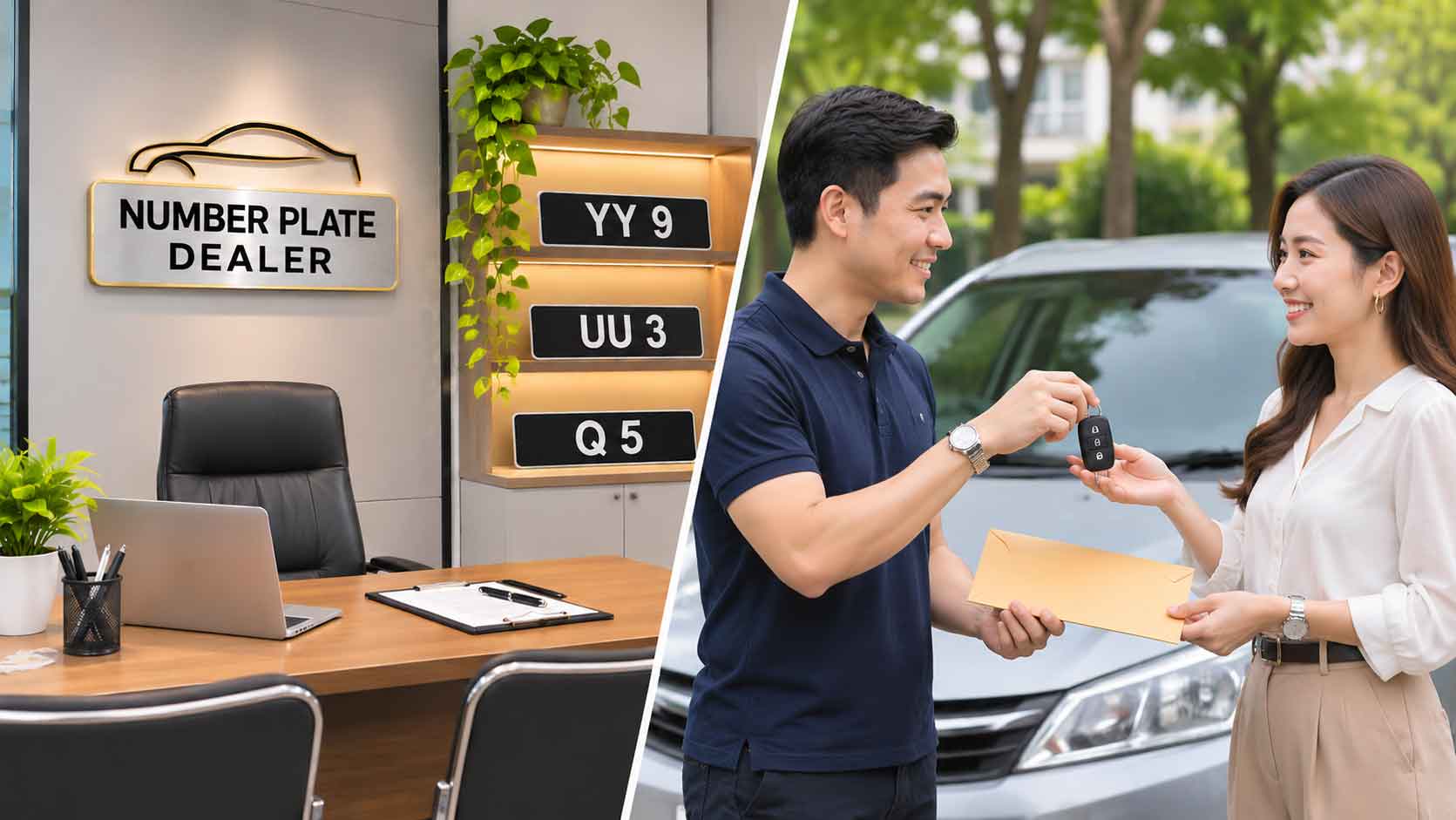
Question 1: Who Actually Owns the VIP Number Plate?
This should be your first question.
When someone advertises a VIP number plate, ask who legally holds the number or who is authorised to handle the sale.
The answer may be different depending on the number’s status:
- Unregistered winning number: Ask to see the official JPJeBid successful bidding result and confirm the name and bidder category.
- Number already registered to a vehicle: Ask for the vehicle registration details and confirm who the registered owner is.
- Number offered through an intermediary: Ask for written authorisation or confirmation that the intermediary is permitted to act for the owner.
Do not rely only on a seller’s social media profile or business card.
If the seller claims to represent a company, ask for the company’s registered name and relevant business details. You can check basic company information through the official Companies Commission of Malaysia (SSM) services.
For a VIP number plate, the key question is not simply whether the seller has the number displayed in an advertisement. It is whether the person has the legal standing to complete the arrangement.
Question 2: Can You Show Me the Documents?
A genuine seller should be willing to explain what documents are available and why they are relevant.
Depending on the number’s status, ask to inspect the appropriate documents.
If the Number Was Won Through JPJeBid
Ask for the official successful bidding result letter or notification. Check:
- The registration number.
- The successful bidder’s name or company details.
- The bidding result information.
- The date of issue and registration validity period.
JPJeBid’s official FAQ states that a successfully bid number must be registered within 12 months from the date of issue of the offer letter. If it is not registered within the required period, the offer expires and the payment is not refunded.
There is another important restriction. JPJeBid states that an individual or passport-category winning number may only be changed to an immediate family member under the stated conditions, with supporting documents. Company, organisation and cooperative winning numbers cannot be changed to another person’s name.
This means an unregistered winning number should not be treated as freely transferable to any buyer. If a seller promises to put an unregistered winning number directly into your name, ask them to explain the official basis and verify it with JPJ before paying.
If the Number Is Already Registered to a Vehicle
Ask for the relevant vehicle registration information and confirm that the person offering the number is the registered owner or has proper authority to act.
Do not accept an old document without checking whether it still reflects the current vehicle and registered owner.
You can also read our guide to buying a number plate from a private seller in Malaysia for more checks before proceeding.
Question 3: How Will the VIP Number Plate Be Transferred?
This is probably the most important question of all.
Some buyers assume that paying a seller is enough to transfer a VIP number plate into their name. That is not how every number transfer works.
JPJ has different procedures depending on whether the number is still unregistered or already attached to a registered vehicle.
Transfer from an Already Registered Vehicle
JPJ’s vehicle registration number transfer procedure covers moving a number from an already registered original vehicle to a new vehicle that has not yet been registered.
One key requirement is that both vehicles must belong to the same owner.
Other requirements include:
- The new vehicle must not yet be registered.
- The original vehicle must undergo the required PUSPAKOM inspection.
- The original vehicle must not be blacklisted by JPJ or PDRM.
- The required documents and fees must be submitted.
This is why a buyer should not assume that a number can simply be taken from a seller’s registered vehicle and placed directly onto the buyer’s new car.
The ownership and registration arrangement must meet JPJ’s requirements. Ask the seller to explain the exact steps and confirm the process with JPJ before making payment.
Transfer of an Unregistered Winning Number
An unregistered JPJeBid winning number follows a different set of rules.
As explained earlier, the successful bidder’s category matters. An individual or passport-category winner may apply to change the name to an eligible immediate family member under JPJeBid’s conditions. Company, organisation and cooperative winning numbers cannot be renamed to another person.
Do not confuse this process with transferring a number from an already registered vehicle.
For the latest requirements, refer to the official JPJ vehicle registration number transfer procedure.
Question 4: What Happens If the Transfer Cannot Be Completed?
Before paying, ask the seller what happens if the proposed registration or transfer cannot be completed.
A reliable seller should be prepared to discuss this clearly instead of making vague promises.
Ask these questions:
- Will the payment be refunded if the process is rejected?
- Who is responsible for any administrative costs?
- What is the expected timeline?
- What happens if the seller cannot provide the required documents?
- Will the agreement be cancelled if the number cannot be registered as promised?
These details should be written down before payment.
For example, if you are buying a VIP number plate through an intermediary, the agreement should identify the actual owner or successful bidder, the number involved, the agreed price, the payment arrangement and what happens if the agreed process cannot be completed.
Do not accept statements such as “Don’t worry, everything can be settled” without a clear explanation.
A written agreement cannot override JPJ rules, but it can help both parties understand their responsibilities.
Question 5: Can I Have a Written Agreement and Payment Record?
Never rely only on a verbal promise when buying an expensive VIP number plate.
Before sending money, ask for a written agreement or transaction confirmation that includes:
- The full names of the buyer and seller.
- The registration number being discussed.
- The agreed purchase price.
- The payment method and payment schedule.
- The documents that will be provided.
- The agreed registration or transfer arrangement.
- The refund or cancellation terms if the process cannot be completed.
Make sure the recipient’s bank account details match the person or business named in the agreement. If payment is requested to a third party, ask why and obtain written confirmation from the actual seller.
Keep copies of the agreement, payment receipt, messages and supporting documents.
Malaysia’s official vehicle buying and selling guidance also recommends having a payment receipt and relevant identification records for transaction safety. These basic records can help reduce misunderstandings between buyers and sellers.
Important Update: JPJ’s Registered Intermediary System Starts in 2027
There is a new JPJ development that buyers should know before choosing a number plate dealer or intermediary.
JPJ has announced the Registered Intermediary System (Sistem Perantara Berdaftar, SPB).
According to JPJ’s official announcement:
- Registration opened on 1 November 2026.
- From 1 January 2027, only individuals or company representatives registered and approved by JPJ may conduct transactions on behalf of customers at JPJ offices and branches.
- Approved intermediaries will receive an official Digital Registered Intermediary Identification Card.
This is important if a number plate dealer or agent says they will visit a JPJ office to handle the transaction on your behalf.
Ask whether the person who will represent you meets the new requirement when it takes effect.
One point needs to be understood clearly: JPJ approval as a registered intermediary does not mean JPJ is a business partner, seller or guarantor of the number plate transaction. It only concerns the intermediary’s approval to handle customer transactions at JPJ offices and branches.
You can check the latest details on JPJ’s Registered Intermediary System page.
5 Warning Signs to Watch Out for Before Paying
Whether you deal with a number plate dealer or a private seller, be careful if you notice any of these signs.
- The seller refuses to show supporting documents
A seller may need to protect personal information, but should still be able to provide suitable proof of the number’s status and authority to sell.
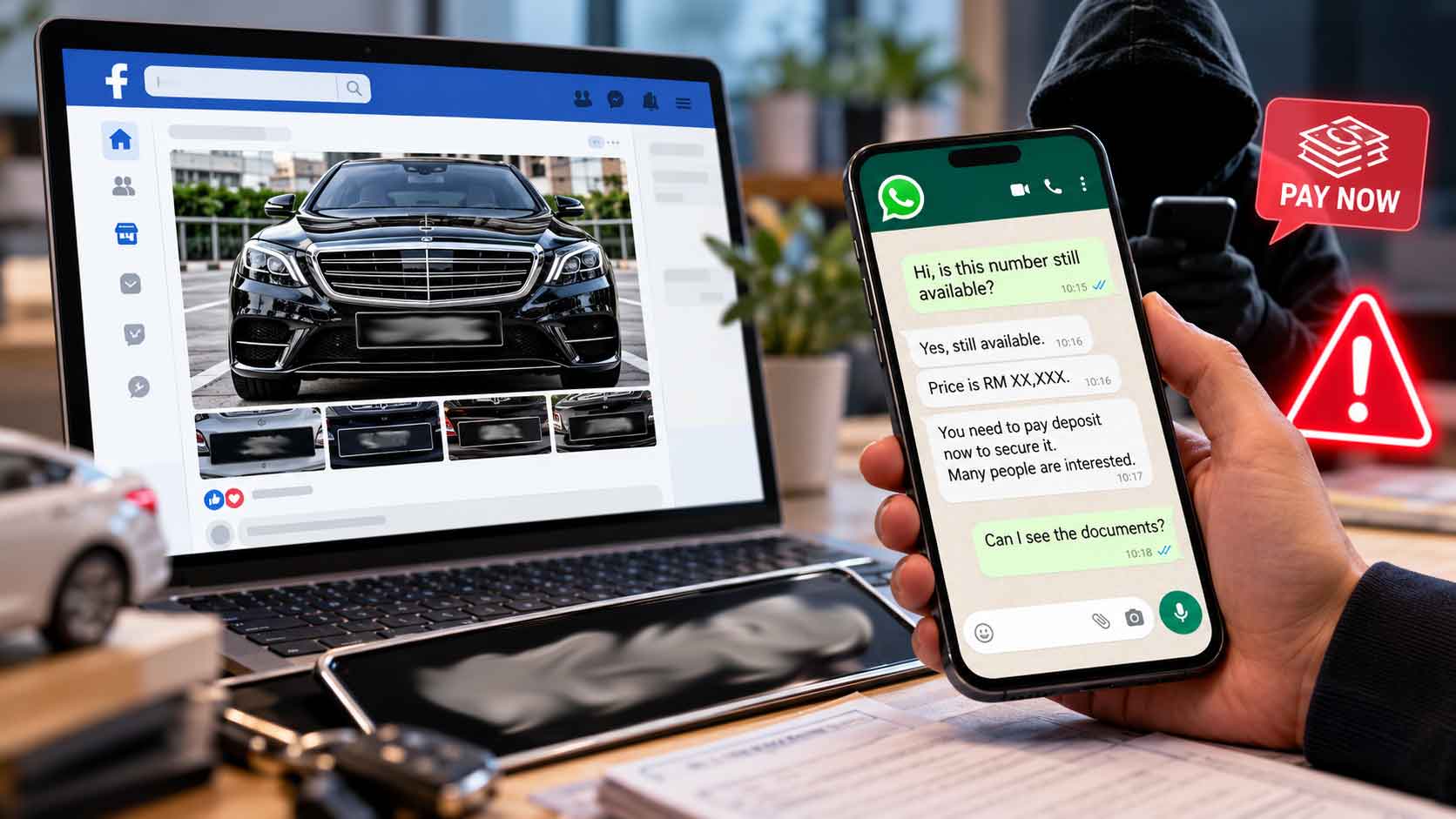
- The seller pressures you to pay immediately
Claims such as “another buyer is waiting” should not stop you from checking the documents and process.
- The bank account belongs to an unrelated person
Ask for a clear explanation and written confirmation before making any payment to a third party.
- The seller guarantees a transfer without explaining the process
A promise is not enough. The proposed arrangement must comply with JPJ’s rules.
- The seller refuses to provide a receipt or written agreement
For a high-value purchase, you should have a clear record of what you are paying for and what the seller has agreed to provide.
If you suspect that an advertised number may be fake, stolen or involved in an unauthorised transaction, stop the payment and seek clarification from JPJ. You can also read our guide to fake and stolen number plates in Malaysia.
So, Should You Choose a Dealer or a Private Seller?
The answer depends on the seller’s credibility and the proposed transaction.
A number plate dealer may offer more choices and assistance, while a private seller may allow direct communication with the person involved. Neither option removes the need to check ownership, documents and JPJ requirements.
Before buying a VIP number plate, remember these five questions:
- Who actually owns or controls the number?
- Can the seller show the relevant documents?
- Is the proposed transfer or registration allowed under JPJ rules?
- What happens if the process cannot be completed?
- Will you receive a written agreement and payment record?
If the seller cannot answer these questions clearly, take a step back. There is no need to rush into a high-value purchase.
Final Thoughts: Verify First, Pay Second
Buying a VIP number plate should be an enjoyable experience, not a stressful transaction.
Whether you choose a number plate dealer or a private seller, make sure the number’s status is clear, the seller has the authority to proceed and the proposed process follows JPJ requirements.
This is especially important for buyers across Malaysia, including Kuala Lumpur, Selangor, Johor, Penang, Sabah and Sarawak, where buyers may deal with sellers from different states.
At Number Plate Malaysia, you can explore available number plate options and make enquiries before deciding. Take your time, compare the choices and ask the right questions.
A good deal is not just about getting the number you want. It is about knowing exactly what you are paying for and how the transaction will be completed.

Private Seller or Dealer? 5 Questions to Ask Before Paying for a VIP Plate
The Short Answer: Never Pay Before You Verify These 5 Things
Buying a VIP number plate in Malaysia can be exciting, especially when you finally find a number you have been looking for. But before making payment, take a moment to check who you are dealing with and whether the number can legally be transferred or registered in your name.
Should you buy from a number plate dealer or a private seller? Neither option is automatically safer. A professional-looking business page does not prove that a seller owns the number, while a private seller is not necessarily dishonest.
Before paying for any VIP number plate, ask these five questions:
- Who is the registered owner or successful bidder?
- Can you provide documents proving the number’s ownership and status?
- How exactly will the number be transferred or registered?
- What happens if JPJ does not approve or complete the process?
- Can I have a written agreement and official payment record?
These questions matter whether you are buying in Kuala Lumpur, Selangor, Johor, Penang, Sabah or Sarawak.
The most important rule is simple: verify the number and the transfer process before paying, not after.
VIP Number Plate Dealer vs Private Seller: Which Is Safer?
There is no automatic winner. Both options can work, but the level of protection depends on the seller’s credibility, the documents provided and the transaction process.
Buying from a Number Plate Dealer
A number plate dealer may have access to different registration numbers and may help buyers understand the available options. Some sellers also offer assistance with paperwork and the administrative process.
Potential advantages include:
- More number choices to compare.
- One point of contact during the enquiry.
- Assistance with understanding the required documents.
- A written quotation or transaction arrangement, if provided.
However, do not assume that every number plate dealer owns the numbers being advertised. Some may act as brokers or intermediaries for other owners.
Ask whether the seller is the registered owner, the successful bidder, an authorised representative or simply an intermediary. These roles are not the same.
Buying from a Private Seller
A private seller may be offering a number already registered to a vehicle or a number obtained through an earlier bidding exercise.
You may be able to communicate directly with the person involved, but you will need to check the ownership documents and understand the applicable JPJ procedure yourself.
Potential advantages include:
- Direct communication with the seller.
- A chance to discuss the price directly.
- The ability to ask for supporting documents from the person claiming ownership.
However, a private seller’s claim is not proof of ownership. A screenshot, number plate photograph or payment receipt alone does not confirm that the seller can legally complete the transaction.
The better choice is the seller who can clearly prove their authority and explain the correct JPJ process.
Question 1: Who Actually Owns the VIP Number Plate?
This should be your first question.
When someone advertises a VIP number plate, ask who legally holds the number or who is authorised to handle the sale.
The answer may be different depending on the number’s status:
- Unregistered winning number: Ask to see the official JPJeBid successful bidding result and confirm the name and bidder category.
- Number already registered to a vehicle: Ask for the vehicle registration details and confirm who the registered owner is.
- Number offered through an intermediary: Ask for written authorisation or confirmation that the intermediary is permitted to act for the owner.
Do not rely only on a seller’s social media profile or business card.
If the seller claims to represent a company, ask for the company’s registered name and relevant business details. You can check basic company information through the official Companies Commission of Malaysia (SSM) services.
For a VIP number plate, the key question is not simply whether the seller has the number displayed in an advertisement. It is whether the person has the legal standing to complete the arrangement.
Question 2: Can You Show Me the Documents?
A genuine seller should be willing to explain what documents are available and why they are relevant.
Depending on the number’s status, ask to inspect the appropriate documents.
If the Number Was Won Through JPJeBid
Ask for the official successful bidding result letter or notification. Check:
- The registration number.
- The successful bidder’s name or company details.
- The bidding result information.
- The date of issue and registration validity period.
JPJeBid’s official FAQ states that a successfully bid number must be registered within 12 months from the date of issue of the offer letter. If it is not registered within the required period, the offer expires and the payment is not refunded.
There is another important restriction. JPJeBid states that an individual or passport-category winning number may only be changed to an immediate family member under the stated conditions, with supporting documents. Company, organisation and cooperative winning numbers cannot be changed to another person’s name.
This means an unregistered winning number should not be treated as freely transferable to any buyer. If a seller promises to put an unregistered winning number directly into your name, ask them to explain the official basis and verify it with JPJ before paying.
If the Number Is Already Registered to a Vehicle
Ask for the relevant vehicle registration information and confirm that the person offering the number is the registered owner or has proper authority to act.
Do not accept an old document without checking whether it still reflects the current vehicle and registered owner.
You can also read our guide to buying a number plate from a private seller in Malaysia for more checks before proceeding.
Question 3: How Will the VIP Number Plate Be Transferred?
This is probably the most important question of all.
Some buyers assume that paying a seller is enough to transfer a VIP number plate into their name. That is not how every number transfer works.
JPJ has different procedures depending on whether the number is still unregistered or already attached to a registered vehicle.
Transfer from an Already Registered Vehicle
JPJ’s vehicle registration number transfer procedure covers moving a number from an already registered original vehicle to a new vehicle that has not yet been registered.
One key requirement is that both vehicles must belong to the same owner.
Other requirements include:
- The new vehicle must not yet be registered.
- The original vehicle must undergo the required PUSPAKOM inspection.
- The original vehicle must not be blacklisted by JPJ or PDRM.
- The required documents and fees must be submitted.
This is why a buyer should not assume that a number can simply be taken from a seller’s registered vehicle and placed directly onto the buyer’s new car.
The ownership and registration arrangement must meet JPJ’s requirements. Ask the seller to explain the exact steps and confirm the process with JPJ before making payment.
Transfer of an Unregistered Winning Number
An unregistered JPJeBid winning number follows a different set of rules.
As explained earlier, the successful bidder’s category matters. An individual or passport-category winner may apply to change the name to an eligible immediate family member under JPJeBid’s conditions. Company, organisation and cooperative winning numbers cannot be renamed to another person.
Do not confuse this process with transferring a number from an already registered vehicle.
For the latest requirements, refer to the official JPJ vehicle registration number transfer procedure.
Question 4: What Happens If the Transfer Cannot Be Completed?
Before paying, ask the seller what happens if the proposed registration or transfer cannot be completed.
A reliable seller should be prepared to discuss this clearly instead of making vague promises.
Ask these questions:
- Will the payment be refunded if the process is rejected?
- Who is responsible for any administrative costs?
- What is the expected timeline?
- What happens if the seller cannot provide the required documents?
- Will the agreement be cancelled if the number cannot be registered as promised?
These details should be written down before payment.
For example, if you are buying a VIP number plate through an intermediary, the agreement should identify the actual owner or successful bidder, the number involved, the agreed price, the payment arrangement and what happens if the agreed process cannot be completed.
Do not accept statements such as “Don’t worry, everything can be settled” without a clear explanation.
A written agreement cannot override JPJ rules, but it can help both parties understand their responsibilities.
Question 5: Can I Have a Written Agreement and Payment Record?
Never rely only on a verbal promise when buying an expensive VIP number plate.
Before sending money, ask for a written agreement or transaction confirmation that includes:
- The full names of the buyer and seller.
- The registration number being discussed.
- The agreed purchase price.
- The payment method and payment schedule.
- The documents that will be provided.
- The agreed registration or transfer arrangement.
- The refund or cancellation terms if the process cannot be completed.
Make sure the recipient’s bank account details match the person or business named in the agreement. If payment is requested to a third party, ask why and obtain written confirmation from the actual seller.
Keep copies of the agreement, payment receipt, messages and supporting documents.
Malaysia’s official vehicle buying and selling guidance also recommends having a payment receipt and relevant identification records for transaction safety. These basic records can help reduce misunderstandings between buyers and sellers.
Important Update: JPJ’s Registered Intermediary System Starts in 2027
There is a new JPJ development that buyers should know before choosing a number plate dealer or intermediary.
JPJ has announced the Registered Intermediary System (Sistem Perantara Berdaftar, SPB).
According to JPJ’s official announcement:
- Registration opened on 1 November 2026.
- From 1 January 2027, only individuals or company representatives registered and approved by JPJ may conduct transactions on behalf of customers at JPJ offices and branches.
- Approved intermediaries will receive an official Digital Registered Intermediary Identification Card.
This is important if a number plate dealer or agent says they will visit a JPJ office to handle the transaction on your behalf.
Ask whether the person who will represent you meets the new requirement when it takes effect.
One point needs to be understood clearly: JPJ approval as a registered intermediary does not mean JPJ is a business partner, seller or guarantor of the number plate transaction. It only concerns the intermediary’s approval to handle customer transactions at JPJ offices and branches.
You can check the latest details on JPJ’s Registered Intermediary System page.
5 Warning Signs to Watch Out for Before Paying
Whether you deal with a number plate dealer or a private seller, be careful if you notice any of these signs.
- The seller refuses to show supporting documents
A seller may need to protect personal information, but should still be able to provide suitable proof of the number’s status and authority to sell.
- The seller pressures you to pay immediately
Claims such as “another buyer is waiting” should not stop you from checking the documents and process.
- The bank account belongs to an unrelated person
Ask for a clear explanation and written confirmation before making any payment to a third party.
- The seller guarantees a transfer without explaining the process
A promise is not enough. The proposed arrangement must comply with JPJ’s rules.
- The seller refuses to provide a receipt or written agreement
For a high-value purchase, you should have a clear record of what you are paying for and what the seller has agreed to provide.
If you suspect that an advertised number may be fake, stolen or involved in an unauthorised transaction, stop the payment and seek clarification from JPJ. You can also read our guide to fake and stolen number plates in Malaysia.
So, Should You Choose a Dealer or a Private Seller?
The answer depends on the seller’s credibility and the proposed transaction.
A number plate dealer may offer more choices and assistance, while a private seller may allow direct communication with the person involved. Neither option removes the need to check ownership, documents and JPJ requirements.
Before buying a VIP number plate, remember these five questions:
- Who actually owns or controls the number?
- Can the seller show the relevant documents?
- Is the proposed transfer or registration allowed under JPJ rules?
- What happens if the process cannot be completed?
- Will you receive a written agreement and payment record?
If the seller cannot answer these questions clearly, take a step back. There is no need to rush into a high-value purchase.
Final Thoughts: Verify First, Pay Second
Buying a VIP number plate should be an enjoyable experience, not a stressful transaction.
Whether you choose a number plate dealer or a private seller, make sure the number’s status is clear, the seller has the authority to proceed and the proposed process follows JPJ requirements.
This is especially important for buyers across Malaysia, including Kuala Lumpur, Selangor, Johor, Penang, Sabah and Sarawak, where buyers may deal with sellers from different states.
At Number Plate Malaysia, you can explore available number plate options and make enquiries before deciding. Take your time, compare the choices and ask the right questions.
A good deal is not just about getting the number you want. It is about knowing exactly what you are paying for and how the transaction will be completed.