
Langkawi & Labuan Number Plate Malaysia: The Complete Duty-Free Island Guide
Quick answer: Langkawi Labuan number plate Malaysia rules work differently from anywhere else in the country. These two islands carry duty-free status, so vehicles registered there — under the KV prefix for Langkawi and L for Labuan — are exempt from the import, excise, and sales duties that mainland car owners pay. Because of that tax advantage, these plates can’t be bought and sold the same casual way as mainland numbers; registration has to happen at the specific JPJ branch that handles each island, not any counter in the country.
That’s the short version. Here’s the history behind these two prefixes, how the tax exemption actually works, and why so many private platforms won’t touch these plates at all.
Why These Two Islands Have Their Own Plate System
Most people assume every Malaysian car plate follows the same rulebook, and for the most part, that’s true — except for Langkawi and Labuan. Both were granted duty-free status, which means vehicles registered on these islands skip several layers of tax that mainland buyers have to absorb. That tax break is exactly why JPJ treats Langkawi Labuan number plate Malaysia registrations as a separate category, with its own paperwork and its own local processing.
It’s also why you’ll occasionally hear about vehicles being “sent to the island” just to get registered there — a workaround some buyers have used over the years to dodge mainland duties, which is part of why JPJ keeps a tighter grip on how these plates get issued. If you want to dig deeper into the full history of Malaysia’s plate prefixes, Wikipedia’s overview of Malaysian vehicle registration plates has a detailed breakdown by state and era.
KV Number Plate Malaysia: The Langkawi Story
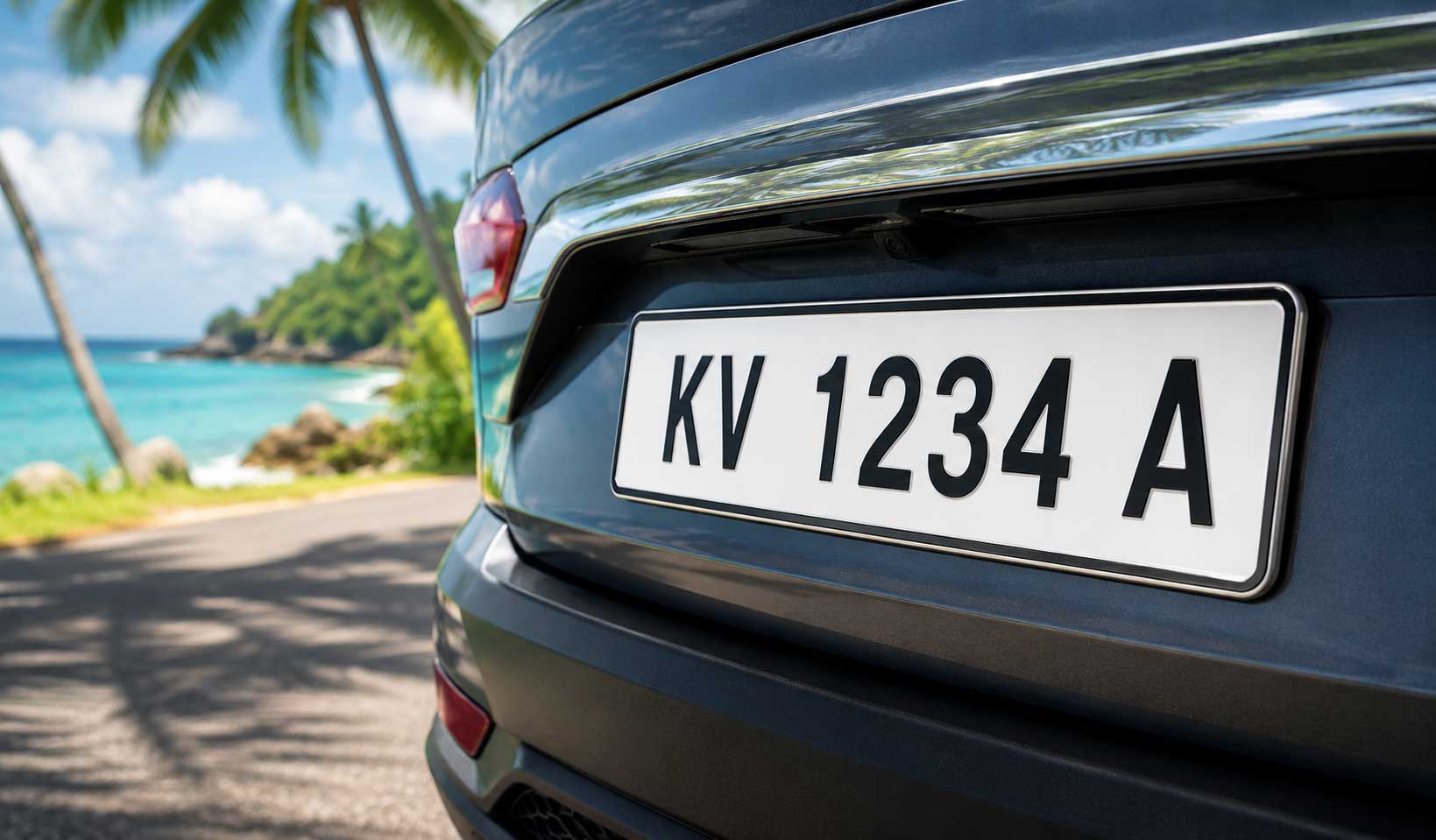
If you’ve vacationed in Langkawi and noticed cars with plates that don’t quite match the rest of Kedah, that’s the KV series at work. Before this prefix existed, Langkawi-registered vehicles simply carried the standard K plates used across Kedah. Once the island secured duty-free status, JPJ split it off into its own prefix — KV, followed by up to four digits and an alphabetical suffix (KV 1234 A, for example).
A KV number plate Malaysia registration isn’t just a cosmetic difference from mainland Kedah plates — it signals that the vehicle qualifies for the island’s tax exemption, which is exactly why JPJ keeps such tight control over who can register one and where. Islanders and long-term residents make up most KV registrations, since the exemption is tied to genuine island use rather than being a loophole tourists can casually exploit.
Labuan’s “L” Series: A Plate With Real History
Labuan’s plate history goes back further than most people expect. The L series was first issued back in 1906, when the island operated as an outpost under the British North Borneo Company. It disappeared in 1963 after Labuan was folded into North Borneo’s — later Sabah’s — own registration conventions, and stayed unused for two decades. When Labuan became a Federal Territory in 1984, JPJ brought the L series back, and it’s remained the island’s dedicated prefix ever since.
Unlike the rest of Sabah, which uses a division-based system (SA, SK, SW, and so on depending on the district), Labuan follows the standard Peninsular-style algorithm on its own — a small but telling detail that reflects its status as a federal territory rather than a regular Sabahan district.
Duty-Free Island Car Registration Malaysia: How the Tax Exemption Actually Works
This is the part that explains why these plates matter beyond just looking different. Vehicles registered under duty-free island car registration Malaysia rules on Langkawi or Labuan are exempt from the import duty, excise duty, and sales tax that apply everywhere else in the country. For certain vehicles, that exemption adds up to a genuinely significant saving compared to registering the same car on the mainland.
That savings potential is also exactly why abuse has been a recurring problem. The G1M commemorative series, for instance, was reportedly registered onto luxury vehicles specifically because it could be issued in Langkawi and Labuan, letting owners sidestep mainland duties entirely. JPJ eventually clamped down by barring certain commemorative series — including the later 1M4U plates — from being registered on either island at all, precisely to close that loophole.
Why You Can’t Just Buy One of These Plates Online
Here’s where Langkawi Labuan number plate Malaysia rules diverge sharply from the rest of the country. Standard state plates can generally be bought and sold on a willing-buyer, willing-seller basis and registered at almost any JPJ branch nationwide. KV and L series numbers don’t work that way — they must be registered specifically at the JPJ office that handles that duty-free zone, not at a general counter elsewhere in Malaysia.
This restriction is exactly why most private plate dealers and marketplaces steer clear of Langkawi and Labuan listings altogether, focusing instead on mainland, Sabah, and Sarawak series where the process is more straightforward. If you’re used to browsing platforms for safely buying a used car plate, don’t expect to find many genuine KV or L listings there — and treat any that do appear with extra scrutiny, since the registration path is so much narrower for these two islands.
What This Means If You’re Actually Moving There
If you’re relocating to Langkawi or Labuan and want to register a vehicle under the local exemption, the process runs through the island’s dedicated JPJ branch rather than any office you’d normally use on the mainland. You’ll need proof of genuine residence or business presence on the island, along with the usual vehicle ownership documents — JPJ isn’t handing out duty-free registrations to anyone simply passing through. For general guidance on what documents JPJ typically expects for a new registration, our overview on new vs used car plate registration covers the standard paperwork side, though the island-specific steps still need to be confirmed with the local branch directly.
Final Word on Langkawi and Labuan Plates
Langkawi Labuan number plate Malaysia registrations exist because of a genuine tax advantage, not just for variety’s sake — and that advantage is exactly why JPJ keeps the process tightly controlled rather than opening it up to the same open marketplace as mainland plates. If you’re a genuine island resident, the KV or L prefix on your car is a real cost saving. If you’re just plate-hunting for something rare and different, these two series are probably the hardest in the country to get your hands on — and for good reason.

Langkawi & Labuan Number Plate Malaysia: The Complete Duty-Free Island Guide
Quick answer: Langkawi Labuan number plate Malaysia rules work differently from anywhere else in the country. These two islands carry duty-free status, so vehicles registered there — under the KV prefix for Langkawi and L for Labuan — are exempt from the import, excise, and sales duties that mainland car owners pay. Because of that tax advantage, these plates can’t be bought and sold the same casual way as mainland numbers; registration has to happen at the specific JPJ branch that handles each island, not any counter in the country.
That’s the short version. Here’s the history behind these two prefixes, how the tax exemption actually works, and why so many private platforms won’t touch these plates at all.
Why These Two Islands Have Their Own Plate System
Most people assume every Malaysian car plate follows the same rulebook, and for the most part, that’s true — except for Langkawi and Labuan. Both were granted duty-free status, which means vehicles registered on these islands skip several layers of tax that mainland buyers have to absorb. That tax break is exactly why JPJ treats Langkawi Labuan number plate Malaysia registrations as a separate category, with its own paperwork and its own local processing.
It’s also why you’ll occasionally hear about vehicles being “sent to the island” just to get registered there — a workaround some buyers have used over the years to dodge mainland duties, which is part of why JPJ keeps a tighter grip on how these plates get issued. If you want to dig deeper into the full history of Malaysia’s plate prefixes, Wikipedia’s overview of Malaysian vehicle registration plates has a detailed breakdown by state and era.
KV Number Plate Malaysia: The Langkawi Story
If you’ve vacationed in Langkawi and noticed cars with plates that don’t quite match the rest of Kedah, that’s the KV series at work. Before this prefix existed, Langkawi-registered vehicles simply carried the standard K plates used across Kedah. Once the island secured duty-free status, JPJ split it off into its own prefix — KV, followed by up to four digits and an alphabetical suffix (KV 1234 A, for example).
A KV number plate Malaysia registration isn’t just a cosmetic difference from mainland Kedah plates — it signals that the vehicle qualifies for the island’s tax exemption, which is exactly why JPJ keeps such tight control over who can register one and where. Islanders and long-term residents make up most KV registrations, since the exemption is tied to genuine island use rather than being a loophole tourists can casually exploit.
Labuan’s “L” Series: A Plate With Real History
Labuan’s plate history goes back further than most people expect. The L series was first issued back in 1906, when the island operated as an outpost under the British North Borneo Company. It disappeared in 1963 after Labuan was folded into North Borneo’s — later Sabah’s — own registration conventions, and stayed unused for two decades. When Labuan became a Federal Territory in 1984, JPJ brought the L series back, and it’s remained the island’s dedicated prefix ever since.
Unlike the rest of Sabah, which uses a division-based system (SA, SK, SW, and so on depending on the district), Labuan follows the standard Peninsular-style algorithm on its own — a small but telling detail that reflects its status as a federal territory rather than a regular Sabahan district.
Duty-Free Island Car Registration Malaysia: How the Tax Exemption Actually Works
This is the part that explains why these plates matter beyond just looking different. Vehicles registered under duty-free island car registration Malaysia rules on Langkawi or Labuan are exempt from the import duty, excise duty, and sales tax that apply everywhere else in the country. For certain vehicles, that exemption adds up to a genuinely significant saving compared to registering the same car on the mainland.
That savings potential is also exactly why abuse has been a recurring problem. The G1M commemorative series, for instance, was reportedly registered onto luxury vehicles specifically because it could be issued in Langkawi and Labuan, letting owners sidestep mainland duties entirely. JPJ eventually clamped down by barring certain commemorative series — including the later 1M4U plates — from being registered on either island at all, precisely to close that loophole.
Why You Can’t Just Buy One of These Plates Online
Here’s where Langkawi Labuan number plate Malaysia rules diverge sharply from the rest of the country. Standard state plates can generally be bought and sold on a willing-buyer, willing-seller basis and registered at almost any JPJ branch nationwide. KV and L series numbers don’t work that way — they must be registered specifically at the JPJ office that handles that duty-free zone, not at a general counter elsewhere in Malaysia.
This restriction is exactly why most private plate dealers and marketplaces steer clear of Langkawi and Labuan listings altogether, focusing instead on mainland, Sabah, and Sarawak series where the process is more straightforward. If you’re used to browsing platforms for safely buying a used car plate, don’t expect to find many genuine KV or L listings there — and treat any that do appear with extra scrutiny, since the registration path is so much narrower for these two islands.
What This Means If You’re Actually Moving There
If you’re relocating to Langkawi or Labuan and want to register a vehicle under the local exemption, the process runs through the island’s dedicated JPJ branch rather than any office you’d normally use on the mainland. You’ll need proof of genuine residence or business presence on the island, along with the usual vehicle ownership documents — JPJ isn’t handing out duty-free registrations to anyone simply passing through. For general guidance on what documents JPJ typically expects for a new registration, our overview on new vs used car plate registration covers the standard paperwork side, though the island-specific steps still need to be confirmed with the local branch directly.
Final Word on Langkawi and Labuan Plates
Langkawi Labuan number plate Malaysia registrations exist because of a genuine tax advantage, not just for variety’s sake — and that advantage is exactly why JPJ keeps the process tightly controlled rather than opening it up to the same open marketplace as mainland plates. If you’re a genuine island resident, the KV or L prefix on your car is a real cost saving. If you’re just plate-hunting for something rare and different, these two series are probably the hardest in the country to get your hands on — and for good reason.